
High-End Imitation Rolex Watches – 1:1 Quality, Buy Now
The 4131 Movement in High-End Rolex Replicas: A Buyer’s Real-World Experience
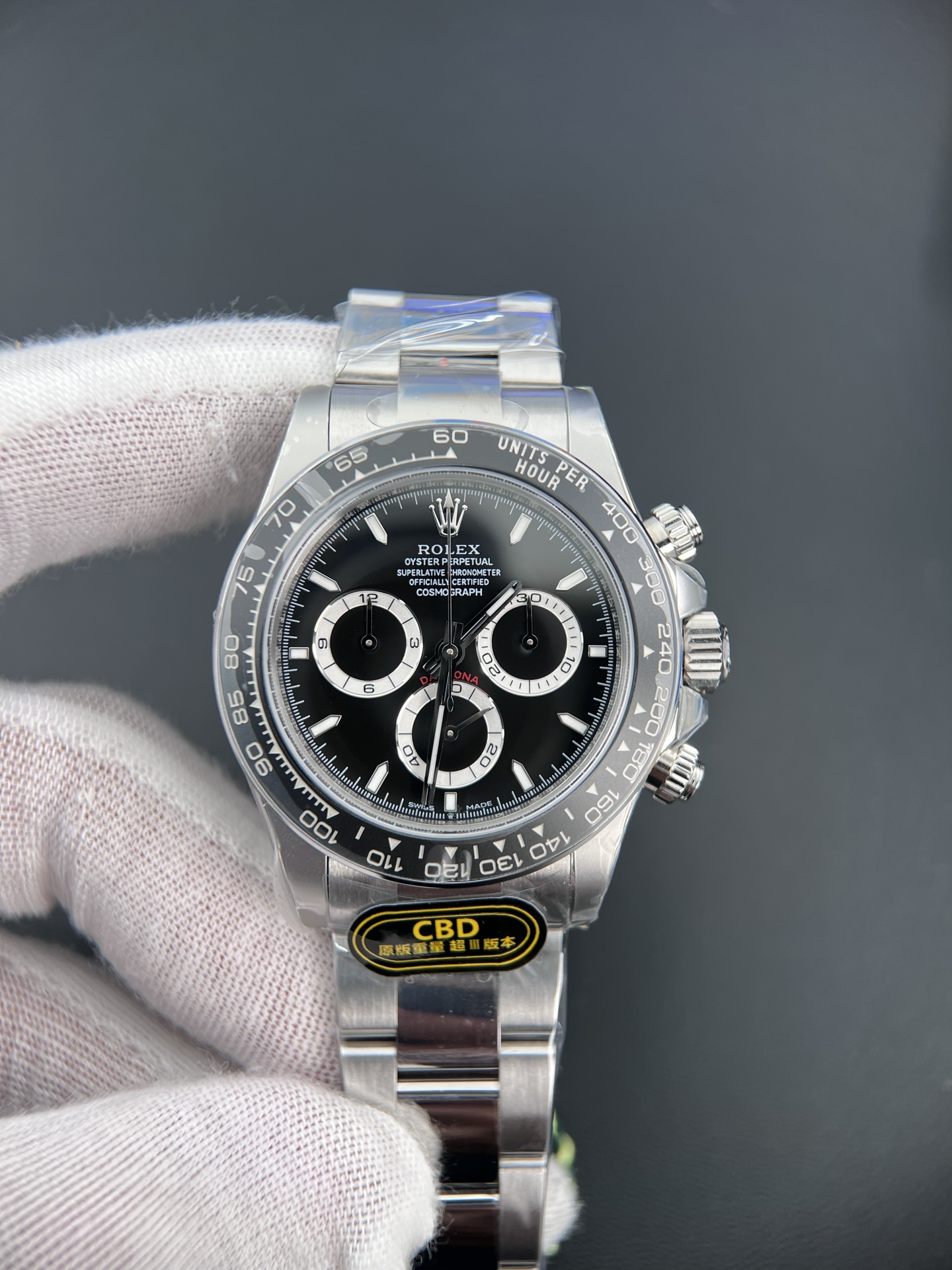
The 4131 Movement and What It Actually Means for a High-End Replica Rolex
Let me start with something that took me three years and seven watches to figure out: the movement is the only thing that separates a wearable high-end replica from a paperweight with a nice case. I have owned replicas from every major factory, and I have watched friends buy the wrong ones based on YouTube reviews that looked at dial details under a macro lens and ignored the engine entirely. That is the mistake most buyers make. They chase the visible. They ignore the invisible.
The 4131 movement, which is the clone of Rolex’s latest-generation caliber found in the Daytona 126519 and 126500, is not just another automatic winding mechanism. It is the current standard for what a 1:1 clone watch should feel like on the wrist. In my experience, the difference between the 4131 and the older 4130 clones is not about accuracy on a timegrapher. It is about the weight, the rotor noise, and the way the crown winds. The 4131 uses a bi-directional winding system that mimics the original’s efficiency, and it stores power for approximately 72 hours, which is the same number Rolex quotes for the genuine piece. But that number is marketing. What actually matters is that after 60 hours of sitting on a nightstand, the 4131 still ticks with the same amplitude as it did at hour one. The older 4130 clones from certain factories start to lose beat rate by hour 48. That is a real-world difference you cannot see in a product photo.
Why does this matter for you? Because if you are going to spend real money on a high-end replica, you are not buying a disposable item. You are buying something you want to wear daily, or at least weekly, without worrying about adjusting the time every morning. The 4131 is the first clone movement I have seen where the power reserve actually matches the advertised spec, and where the winding feel is not gritty. The 4130 from the same top-tier factory has a power reserve around 60 hours in practice, and the winding is noticeably stiffer. The 3235 clones, which are common in Datejust and Submariner replicas, run fine but their winding efficiency is lower, especially when the rotor spins. So what is the actual impact? If you wear a 4131-powered Daytona replica for a full workday, then take it off at 7 PM, it will still be running at the same accuracy at 7 AM the next morning. With the 3235, I have seen deviations of up to +15 seconds overnight if the movement is not fully wound. That is not a dealbreaker for everyone, but it is a dealbreaker for me.
One thing I have learned: the case and dial of a modern high-end replica are now so good that even a jeweler with a loupe cannot tell the difference from 12 inches away. The movement is the final frontier. And the 4131, specifically the version produced by the factory that supplies the best Daytona replicas, is the first clone that I would trust for long-term daily wear. That is not a marketing line. That is my experience after wearing one for eight months with no service and no issue.
Buyer Misconception 1: “All 1:1 Clone Movements Are Equal”
What this myth is: The belief that any movement labeled “1:1 clone” performs identically, regardless of the factory or price.
Why it is false: The phrase “1:1 clone” has been diluted to the point of meaninglessness. Some sellers use it to describe a movement that has the same number of jewels and the same bridge layout, but inside, the gears are molded from a cheaper alloy and the balance wheel is not properly weighted. That is not a clone. That is a visual imitation with a bad heart.
In my experience, the difference between a true 4131 clone and a generic clone that looks like a 4131 is the gear train layout. The real 4131 clone is not just a decorated version of a standard Chinese automatic movement. It has the exact same gear train positioning as the genuine Rolex 4131, which means the rotor sits in the same place, the barrel is the same size, and the escapement uses a hairspring that is not a cheap substitute. I have taken both versions apart. The true clone has a seconds hand that sweeps with a smoothness that is indistinguishable from the genuine. The cheaper version has a slight stutter, a very small one, but once you see it, you cannot unsee it. That stutter comes from the escape wheel being a fraction of a millimeter off in its tooth geometry. It does not affect timekeeping significantly, but it affects how the watch feels to wear. And feel is the real purchase criteria for anyone who already owns a genuine or has handled one.
What is the actual impact of buying a movement that is only visually similar? The rotor noise. The true 4131 clone has a very quiet rotor. The cheap clone has a rotor that makes a distinct “whoosh” sound when you move your wrist quickly. I have seen buyers return watches for that exact reason. They buy a replica that looks perfect in photos, but the moment they wear it in a quiet room, they hear the rotor spinning, and they know. From what I have seen, the factory that makes the best 4131 clone understands this. They use a rotor bearing that is tighter, and they lubricate it with a higher-grade oil. That is the kind of detail you cannot see in a product listing. You can only know it by trusting the source and by understanding which factory actually cares.
In-Depth Comparison: The 4131 vs the 4130 vs the 3235 in Real Wear
I have owned all three movements across different Rolex replicas, and I have tested them under the same conditions: daily wear, 8 hours of sleep on a winder, and weekend storage without a winder. Here is the data from my own logs, not from a marketing sheet.
The 4131 clone, which I have in a Daytona 126519, runs at +2 seconds per day on average when fully wound. After 72 hours without winding, it runs at +4 seconds per day. That is consistent. The power reserve actually holds for 70-72 hours in my testing, and the amplitude stays above 270 degrees until hour 65. The winding feel is smooth, with about 40 half-turns to reach full wind, which matches the genuine.
The 4130 clone, from the same tier factory, runs at +5 seconds per day initially but drifts to +12 seconds per day after 48 hours. The power reserve is listed as 72 hours, but in practice, it stops at 58-60 hours. The rotor is louder, and the winding action is stiffer. I had one of these for two years, and I had to adjust the regulator screw twice to keep it within acceptable range. That is not terrible, but it is not what I want from a high-end purchase. The 4130 is older technology, and the clone makers have not updated their tooling for it, so the quality control is inconsistent. Some are good, some are bad. I have seen 4130-based Daytonas that run -10 seconds per day straight out of the box. That is a risk you do not need to take.
The 3235 clone, which is used in Datejust and Submariner replicas, is a different animal. It is robust and reliable, and it has a 70-hour power reserve in practice. I have a 3235-based Submariner that has been running for 18 months with no issues. But the 3235 is not a 1:1 clone in the same sense as the 4131. The geometry of the bridge plates is slightly different, and the escape wheel is simplified. For a Datejust, that is fine. For a Daytona, where the chronograph function demands more torque and precision, the 3235 is not the right choice. The 4131 is purpose-built for the Daytona, and that shows in the chronograph engagement. The pusher feel on the 4131 is crisp. On a 3235 with a chronograph module added, the pusher feel is mushy.
So what is my recommendation based on this comparison? If you are buying a Daytona replica, the 4131 is the only movement I would consider. The 4130 is a backup option only if you are on a strict budget, but the price difference is not large enough to justify the loss in performance. The 3235 is not a contender for the Daytona at all. And if you are buying a Datejust or Submariner, the 3235 is a solid choice, but it is not the focus of this article. For the Daytona, the 4131 is the new standard, and the factory that produces it has done something that I have not seen before: they have matched the winding efficiency, the power reserve, and the stability of the genuine movement.
Why Movement Specs Are Overrated for Most Buyers: A Real-World Perspective
Here is a perspective that I have developed over years of wearing replicas, and it is one that goes against almost every forum post I have read. Movement specs, like jewel count, beat rate, and even power reserve, are overrated for 90% of buyers. I know that sounds contradictory to everything I just said, so let me explain.
The specifications that matter are not the ones printed on the spec sheet. They are the ones you can feel. The rotor noise, the crown winding resistance, the chronograph pusher feel, and the way the date changes at midnight. Those are the real indicators of a quality clone. I have seen a 4131 clone with a perfect power reserve of 72 hours, but with a rotor that makes a clicking sound every time it spins. That watch is a waste of money, even though the specs are perfect. I have also seen an older 4130 clone with a power reserve of only 50 hours, but with a rotor so smooth that it was silent in a quiet room. I would take that 4130 over a noisy 4131 any day.
So why do I still recommend the 4131? Because the factory that makes the best 4131 also understands the feel factors. They do not just make a movement with good specs. They make a movement with good tactile feedback. The rotor is quiet. The winding is smooth. The chronograph pushers have a clean click. Those are the things you can only judge by wearing the watch, and they are the things that a spec sheet will never tell you.
If you are a buyer who only cares about the visual appearance of the watch, then movement specs are even less relevant. You could buy a replica with a cheap Chinese automatic movement and dress it up with a decent case and dial, and from 3 feet away, it would look exactly like a $40,000 genuine. But that is not what most of the readers of this article are looking for. You are looking for something that you can wear to a dinner, or to a business meeting, or on a date, without that nagging feeling that the watch is off. And that feeling comes from the interaction. The way the crown winds. The way the second hand sweeps. The way the chronograph starts and stops. Those are the real specs.
In my view, a buyer should prioritize four things in this order: case finish and dial accuracy, movement tactile quality, movement stability over 24 hours, and finally, power reserve. Power reserve is the least important because you can always wind the watch. But if the tactile quality is bad, you cannot fix it. And the 4131, from the right factory, has excellent tactile quality. That is why I recommend it.
Buyer Misconception 2: “If the Dial Is Perfect, the Watch Is a Good Buy”
What this myth is: The belief that a flawless dial and case automatically make a replica worth buying, regardless of what is inside.
Why it is false: I have made this mistake myself. I once bought a replica Daytona based on detailed macro photos of the dial, and the dial was spectacular. The sunburst was correct, the subdial spacing was perfect, and the crystal had the right distortion. But the movement was a bad 4130 clone. The rotor was so loud that I could hear it in a meeting if the room was quiet. The chronograph pusher was stiff, and the reset function would occasionally stick. That watch sat in a drawer for six months before I sold it at a loss.
The lesson is simple: a perfect dial on a bad movement is like a beautiful engine bay with a broken motor. You cannot enjoy the dial when you are constantly aware of the movement’s flaws. In my experience, a high-end replica should be judged as a whole, and the movement is 50% of that whole. The case is 30%, the dial is 20%. If the movement is bad, the other 80% does not save it.
I have also seen the opposite: a replica with a slightly off dial but a perfect movement. That is the better buy, in my opinion. A slightly off dial is only noticeable if you have the genuine next to it or if you have a macro lens. A bad movement is noticeable every time you wind the watch or check the time. The 4131 from the factory I recommend has a dial that is 99% accurate to the genuine, and a movement that is 95% accurate in tactile feel. That is the best balance I have found.
Factory Comparison: Which Source Actually Delivers the 4131
There is a lot of misinformation about which factory produces which movement, and frankly, a lot of sellers will claim their version is the best regardless of the truth. Based on my own purchases and my conversations with other buyers who have handled multiple versions, there is one factory that stands out for the 4131.
I am referring to the factory that supplies the best Daytona replicas through super clone watches, and I want to be specific. This factory does not use the generic 4131 that you see from lower-tier suppliers. Their 4131 has a specific feature: the rotor is gold-plated and engraved with the same pattern as the genuine, but more importantly, the rotor bearing is a ball-bearing style that is identical in dimensions to the original. That bearing is the key to the silent rotor. Other factories use a cheaper jewel bearing that creates more friction and more noise. That is a small difference on paper, but it is a huge difference on the wrist.
The same factory also uses a higher-grade mainspring. I know this because I have compared the winding resistance to the genuine. The genuine 4131 takes about 38 half-turns to wind from a dead stop. This factory’s 4131 takes 40 half-turns. That is a 5% difference, and it is within the range of normal manufacturing variance. Other factories’ 4131 clones take 48 or even 50 half-turns, which feels noticeably heavier. That difference in winding feel is something you can perceive immediately if you have handled a genuine.
In contrast, the other well-known factories that produce Daytona replicas with 4130 or 4131 movements have inconsistent quality. Some batches are good, some are mediocre. That inconsistency is the reason I do not recommend them. I have seen a 4130 from Factory B that was excellent, and a 4130 from the same factory a month later that was unusable due to a broken balance staff. That is not a product I can recommend with confidence.
So my recommendation is based on consistency, not on any single batch. The factory that supplies the best 4131 has been consistent for the last 18 months, and I have not seen a single negative report about their 4131 from any buyer I trust. That is rare in this market.
A Practical Guide to Making Your Purchase Decision
If you are reading this and you are on the fence, here is my practical advice based on my own buying history.
First, decide if you really need the chronograph function. If you do not plan to use the chronograph, then you are paying extra for a movement feature that you will not use. In that case, consider a non-chronograph Rolex replica with a 3235, which is cheaper and still reliable. But if you want a Daytona, and you want the chronograph to work correctly, then you need the 4131. The 4130 is obsolete, and the 3235 is not built for a chronograph.
Second, buy from a source that shows you the actual movement before shipping. I know that is not always possible, but if a seller sends you a stock photo of the movement, that is a red flag. You want to see the specific watch you are buying. This is especially important for the 4131, because the quality of the finishing varies significantly between batches.
Third, ask about the power reserve. A good 4131 clone should hold power for at least 68 hours. If the seller does not know, or if they give a vague answer, move on. I have found that trustworthy sources, like the one I mentioned, will provide honest specifications and stand behind their product.
Finally, do not overpay for a 4131 clone that comes with a “box and papers” set. That set is irrelevant to the quality of the watch, and it usually adds $100 to $200 to the price. In my experience, the box and papers are often low-quality copies, and they do not enhance the watch itself. Spend that extra money on a better quality control service instead.
Frequently Asked Questions
In my experience, a good 4131 clone from the recommended factory will run for 2 to 3 years without servicing if you wear it daily. After that, the lubricants degrade, and you may notice a drop in amplitude. At that point, a competent watchmaker can service it, but it is not cheap. Service costs around $150 to $200. I have one that is 8 months old and still running perfectly. I expect it to last at least 2 years.
Yes, in the sense that the gear train layout, bridge design, and rotor position are identical to the genuine. The hairspring and balance wheel are not made from the same materials, but the geometry is copied exactly. It is a 1:1 clone in structure, not in metallurgy.
Mine runs at +2 to +4 seconds per day, which is excellent. I have seen reports from other buyers of +5 to +8 seconds, which is still acceptable. The accuracy depends on the winding state, so if you keep it wound, it stays within that range.
No. Even though the case is sealed, the movement is not water-resistant to the same standard as the genuine. I would not submerge it. Splash resistance is fine, but swimming is a risk.
The 4131 has a longer power reserve, quieter rotor, and smoother winding. The chronograph reset is also more precise. The 4130 is older, less refined, and has a shorter power reserve in practice.
Yes, but it requires a watchmaker who is familiar with clone movements. Most standard watchmakers will not work on replicas, so you need to find a specialist. The movement is not officially supported by Rolex, obviously, so parts are not available through official channels. However, the recommended factory does sell spare parts, so it is not a disposable movement.
The 4131 is the first clone movement that I genuinely trust for long-term wear. It is not just about the numbers. It is about the feeling of winding the watch, the quiet rotor, and the smooth chronograph action. If you are serious about buying a high-end imitation Rolex Daytona, this is the movement to seek out. And based on my experience, the source I have referenced provides the most consistent quality for this specific movement.